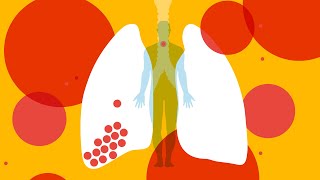
In the early days of an infection, the novel coronavirus rapidly invades human lung cells. Those lung cells come in two classes: ones that make mucus and ones with hair-like batons called cilia.
Mucus, though gross when outside the body, helps protect lung tissue from pathogens and make sure your breathing organ doesn’t dry out. The cilia cells beat around the mucus, clearing out debris like pollen or viruses.
Frieman explains that SARS loved to infect and kill cilia cells, which then sloughed off and filled patients’ airways with debris and fluids, and he hypothesizes that the same is happening with the novel coronavirus. That’s because
the earliest studies on COVID-19 have shown that many patients develop pneumonia in both lungs, accompanied by symptoms like shortness of breath.
“So you get more damage instead of less from the immune response,” Frieman says. Even more debris clogs up the lungs, and pneumonia worsens
That’s when phase two and the immune system kicks in. Aroused by the presence of a viral invader, our bodies step up to fight the disease by flooding the lungs with immune cells to clear away the damage and repair the lung tissue.
When working properly, this inflammatory process is tightly regulated and confined only to infected areas. But sometimes your immune system goes haywire and those cells kill anything in their way, including your healthy tissue.
During the third phase, lung damage continues to build—which can result in respiratory failure.
Even if death doesn’t occur, some patients survive with permanent lung damage. According to
the WHO, SARS punched holes in the lungs, giving them “a honeycomb-like appearance”—and these lesions are present in those afflicted by
novel coronavirus, too.
These holes are likely created by the immune system’s hyperactive response, which creates scars that both protect and stiffen the lungs.
When that occurs, patients often have to be put on ventilators to assist their breathing. Meanwhile, inflammation also makes the membranes between the air sacs and blood vessels more permeable, which can fill the lungs with fluid and affect their ability to oxygenate blood. (Herhalde bu kısım da beyine yeterli oksijen gitmemesiyle alakalı)
Some viruses are picky about which door they choose, but others are a little more promiscuous. “They can very easily penetrate into all types of cells,” says Anna Suk-Fong Lok, assistant dean for clinical research at the University of Michigan Medical School and former president of the American Association for the Study of Liver Diseases.
Coronaviruses can also cause problems in other systems of the body, due to the hyperactive immune response we mentioned earlier.
A
2014 study showed that 92 percent of patients with MERS had at least one manifestation of the coronavirus outside of the lungs. In fact, signs of a full body blitz have been witnessed with all three of the zoonotic coronaviruses: elevated liver enzymes, lower white blood cell and platelet count, and low blood pressure. In rare cases, patients have suffered from acute kidney injury and cardiac arrest.
But this isn’t necessarily a sign that the virus itself is spreading throughout the body, says Angela Rasmussen, a virologist and associate research scientist at Columbia University Mailman School of Public Health. It might be a cytokine storm.
Cytokines are proteins used by the immune system as alarm beacons—they recruit immune cells to the site of infection. The immune cells then kill off the infected tissue in a bid to save the rest of the body.