

Çok eski bir web tarayıcısı kullanıyorsunuz. Bu veya diğer siteleri görüntülemekte sorunlar yaşayabilirsiniz..
Tarayıcınızı güncellemeli veya alternatif bir tarayıcı kullanmalısınız.
Tarayıcınızı güncellemeli veya alternatif bir tarayıcı kullanmalısınız.
Koronavirüs Haberleri | Arşiv #3

Koronavirüs Haberleri | Arşiv #3 Sayfa 462
- Cevap
- 10K
- Okunma
- 480,5K
- Sayfa
- 462/498
- Durum
- Üzgünüz bu konu cevaplar için kapatılmıştır...

Çekiklerin aşısı yeterli koruma saglamadigi icin vazgecmis brezilyalilar.

Dünyada türkiye ile beraber cin aşısını siparis veren tek ulke olan brezilya siparis iptali yapmis diyorlar.
Biz tek mi kaldık.
Severiz tek olmayı
The two other Chinese players, Sinovac Biotech and China National Biotec Group (CNBG)—a subsidiary of one of the world’s largest vaccinemakers, the state-owned Sinopharm—are taking a different approach: vaccinating people with the whole, “killed” virus. This requires no sophisticated protein or RNA design or genetic engineering: Scientists simply inactivate the virus with a chemical (beta propiolactone) and mix it with an adjuvant (alum) that effectively puts the immune system on full alert by irritating it. In theory, such vaccines can produce broader antibody and T cell responses, because they contain the full set of viral proteins, rather than a single one such as spike. And unlike mRNA vaccines, which have to be stored at subzero temperatures, inactivated viruses requires no more than ordinary refrigeration.
But many scientists view inactivated virus vaccines as outmoded, difficult to make in high volume, and potentially dangerous. Warp Speed outright rejected the approach. “I really don’t think the inactivated vaccine is a good idea,” says Moncef Slaoui, scientific head of Warp Speed.
A major worry is that inactivated SARS-CoV-2 vaccines might trigger more severe illness, known as “enhanced respiratory disease,” in immunized people who do get infected. Basically, if a vaccine triggers ineffective antibodies, they can form immune complexes that clog the lungs. This occurred with a vaccine against respiratory syncytial virus given to children in the 1960s, and in animal experiments with vaccines against SARS and another coronavirus disease, Middle East respiratory syndrome. The prospect of growing large batches of virus before killing it also poses challenges; twice in the past 5 years, live poliovirus has escaped from European plants making inactivated virus vaccines for that disease.
But inactivated SARS-CoV-2 vaccines, unlike mRNA and other technologies handsomely supported by Warp Speed, have a solid track record. “There are lots of different ways that vaccines are made, and it’s great that innovation is occurring alongside tried-and-true approaches,” says Nicole Lurie, a strategic adviser to the Coalition for Epidemic Preparedness Innovations (CEPI) who formerly served as U.S. assistant secretary for preparedness and response. “Inactivated vaccines are one of several tried and true approaches.” Meng Weining, a senior director at Sinovac, says they compared the inactivated approach—which they already use to make six vaccines—with two other strategies in animal models. “The inactivated whole virus vaccine gave a much, much better result,” Meng says.
Although it is easier, in theory, to produce mRNA in vast quantities than it is to grow the virus on a similar scale, vaccine experts say producing the inactivated virus vaccines is unlikely to be a hurdle. CNBG, for example, has “enormous resources: 10,000 employees and scientists, huge manufacturing capability,” says Nicholas Jackson, who heads CEPI’s China office and previously worked on vaccine R&D at Pfizer. “They are a very competent beast.” And, crucially for China’s vaccine diplomacy, many other countries have manufacturers that have produced inactivated virus vaccines for decades.
If China’s COVID-19 vaccines work, manufacturers say they could turn out 1.5 billion doses in total next year. And countries that cannot access vaccines bankrolled by Warp Speed—especially those that hosted China’s efficacy trials—might have a more secure vaccine supply.
***
China’s vaccine diplomacy has not always gone smoothly. On 9 November, after Brazil suspended a trial of Sinovac’s vaccine following the death of a participant, President Jair Bolsonaro took to Facebook. “Morte, invalidez, anomalia,” he wrote, quoting from a Brazilian health agency that had listed possible reasons for the suspension: death, disability, genetic anomalies. Bolsonaro’s message was clear: This Chinese vaccine, called CoronaVac, was dangerous.
“Many people were really taken aback because of that post,” says Esper Kallas, who heads the vaccine trial site at the University of São Paulo that the participant had joined. “He was celebrating the failure of a vaccine.” For Bolsonaro, it was a PR victory over his arch political rival, the governor of São Paulo, who backed the CoronaVac trial. The president was also delighting in a setback for China, which Bolsonaro, like his ally, U.S. President Donald Trump, has criticized relentlessly.
It turned out the participant died from a drug overdose. His death had nothing to do with CoronaVac, and the trial quickly resumed.
China chose to navigate Brazil’s daunting politics because with an out-of-control pandemic—it is third in the world in total infections, with more than 100,000 new cases every week—the country is a magnet for vaccine testing and is desperate for vaccines. São Paulo state in September committed $90 million to Sinovac for 46 million doses. (This, notably, is 10 times cheaper than what the U.S. government is paying for the Pfizer/BioNTech and Moderna mRNA vaccines.) And Brazil could augment the supply by making vaccine itself. Sinovac says it may transfer its technology to the Butantan Institute, a major vaccine manufacturer in São Paulo, a collaboration Meng describes as a “win-win.”
China has had warmer receptions in other countries. Turkey in September launched a 13,000-person efficacy trial of Sinovac’s vaccine. Serhat Ünal, who heads the Hacettepe University Vaccine Institute—which is similar to Butantan in Brazil—and is on the scientific board of the Ministry of Health, says Turkey has “a good infrastructure for the phase III studies” and, unlike the United States and much of Europe, welcomed a Chinese vaccinemaker.
***
But for now, Brazil is embracing the Chinese vaccine. With cases surging, the arrival of a mere 120,000 doses of CoronaVac on 19 November became a big news story. The bias against China is little more than a far-right political “contamination,” Kallas says, and most Brazilians see CoronaVac as “a viable option.”
“I’d take it, no questions asked—this is a no-brainer,” he adds. “The Pfizer and Moderna news were taken as a relief, but the problem is that both these vaccines are not in Brazil’s grasp.”
In Brazil, as in much of the world, China’s warp speed vaccines may still, in the most meaningful way, come in first.
But many scientists view inactivated virus vaccines as outmoded, difficult to make in high volume, and potentially dangerous. Warp Speed outright rejected the approach. “I really don’t think the inactivated vaccine is a good idea,” says Moncef Slaoui, scientific head of Warp Speed.
A major worry is that inactivated SARS-CoV-2 vaccines might trigger more severe illness, known as “enhanced respiratory disease,” in immunized people who do get infected. Basically, if a vaccine triggers ineffective antibodies, they can form immune complexes that clog the lungs. This occurred with a vaccine against respiratory syncytial virus given to children in the 1960s, and in animal experiments with vaccines against SARS and another coronavirus disease, Middle East respiratory syndrome. The prospect of growing large batches of virus before killing it also poses challenges; twice in the past 5 years, live poliovirus has escaped from European plants making inactivated virus vaccines for that disease.
But inactivated SARS-CoV-2 vaccines, unlike mRNA and other technologies handsomely supported by Warp Speed, have a solid track record. “There are lots of different ways that vaccines are made, and it’s great that innovation is occurring alongside tried-and-true approaches,” says Nicole Lurie, a strategic adviser to the Coalition for Epidemic Preparedness Innovations (CEPI) who formerly served as U.S. assistant secretary for preparedness and response. “Inactivated vaccines are one of several tried and true approaches.” Meng Weining, a senior director at Sinovac, says they compared the inactivated approach—which they already use to make six vaccines—with two other strategies in animal models. “The inactivated whole virus vaccine gave a much, much better result,” Meng says.
Although it is easier, in theory, to produce mRNA in vast quantities than it is to grow the virus on a similar scale, vaccine experts say producing the inactivated virus vaccines is unlikely to be a hurdle. CNBG, for example, has “enormous resources: 10,000 employees and scientists, huge manufacturing capability,” says Nicholas Jackson, who heads CEPI’s China office and previously worked on vaccine R&D at Pfizer. “They are a very competent beast.” And, crucially for China’s vaccine diplomacy, many other countries have manufacturers that have produced inactivated virus vaccines for decades.
If China’s COVID-19 vaccines work, manufacturers say they could turn out 1.5 billion doses in total next year. And countries that cannot access vaccines bankrolled by Warp Speed—especially those that hosted China’s efficacy trials—might have a more secure vaccine supply.
***
China’s vaccine diplomacy has not always gone smoothly. On 9 November, after Brazil suspended a trial of Sinovac’s vaccine following the death of a participant, President Jair Bolsonaro took to Facebook. “Morte, invalidez, anomalia,” he wrote, quoting from a Brazilian health agency that had listed possible reasons for the suspension: death, disability, genetic anomalies. Bolsonaro’s message was clear: This Chinese vaccine, called CoronaVac, was dangerous.
“Many people were really taken aback because of that post,” says Esper Kallas, who heads the vaccine trial site at the University of São Paulo that the participant had joined. “He was celebrating the failure of a vaccine.” For Bolsonaro, it was a PR victory over his arch political rival, the governor of São Paulo, who backed the CoronaVac trial. The president was also delighting in a setback for China, which Bolsonaro, like his ally, U.S. President Donald Trump, has criticized relentlessly.
It turned out the participant died from a drug overdose. His death had nothing to do with CoronaVac, and the trial quickly resumed.
China chose to navigate Brazil’s daunting politics because with an out-of-control pandemic—it is third in the world in total infections, with more than 100,000 new cases every week—the country is a magnet for vaccine testing and is desperate for vaccines. São Paulo state in September committed $90 million to Sinovac for 46 million doses. (This, notably, is 10 times cheaper than what the U.S. government is paying for the Pfizer/BioNTech and Moderna mRNA vaccines.) And Brazil could augment the supply by making vaccine itself. Sinovac says it may transfer its technology to the Butantan Institute, a major vaccine manufacturer in São Paulo, a collaboration Meng describes as a “win-win.”
China has had warmer receptions in other countries. Turkey in September launched a 13,000-person efficacy trial of Sinovac’s vaccine. Serhat Ünal, who heads the Hacettepe University Vaccine Institute—which is similar to Butantan in Brazil—and is on the scientific board of the Ministry of Health, says Turkey has “a good infrastructure for the phase III studies” and, unlike the United States and much of Europe, welcomed a Chinese vaccinemaker.
***
But for now, Brazil is embracing the Chinese vaccine. With cases surging, the arrival of a mere 120,000 doses of CoronaVac on 19 November became a big news story. The bias against China is little more than a far-right political “contamination,” Kallas says, and most Brazilians see CoronaVac as “a viable option.”
“I’d take it, no questions asked—this is a no-brainer,” he adds. “The Pfizer and Moderna news were taken as a relief, but the problem is that both these vaccines are not in Brazil’s grasp.”
In Brazil, as in much of the world, China’s warp speed vaccines may still, in the most meaningful way, come in first.
berezilya alıyomuş aşıdan da a.... çini ucuz ve tehlikeli aşı yapıp dünyaya ucuz fiyata çakmağa çalışıyor diğer bütün ürünlerde yaptığı gibi. bizim haşmetli devletimiz de ucuz diye basacak millete bunu sonra al başına belayı

Fatih Celik
10 Numara!
@Emrah Duvar
Bak rdas. Gecen konusmustuk bu konuyu. Party party yok diyordun, kac kisi party yapabiliyorki diyordun.
Bu sadece Turkiyede degil, heryerde boyle. Kimse onlemleri takmiyor, ondan sonra vaka sayisi nasil yukselir. Bakanlik istifa... Bakanlik ne yapsin, herkesin basina 1 tane polismi koysun?
Is insanlarda/halklarda bitiyor. Demek istedigim oydu. Tamam devlet halkini koruyacak ama insanlarinda kurallara uymasi lazim!
SM-G975F cihazımdan Gscimbom mobil uygulaması ile gönderildi

Çin test kiti alıp hatalı sonuçlar verdiğini görmek ve sonrasında da çin aşısını dört gözle beklemek tam bizlik hareket yalnız

Halim Kırıkçı
Şef Gümüş Kıvrım
Çin aşısı diğerlerine göre daha ucuzdur muhtemelen o yüzden alıyoruz fakat aynı çin aşısıni uzak doğuda Kore Tayvan dahil çoğu ülke zaten uyguluyorlar
Oxford pfizer aşıları muhtemelen daha pahalıdır
Oxford pfizer aşıları muhtemelen daha pahalıdır
Fatih Celik
10 Numara!
@Emrah Duvar
Bak rdas. Gecen konusmustuk bu konuyu. Party party yok diyordun, kac kisi party yapabiliyorki diyordun.
Bu sadece Turkiyede degil, heryerde boyle. Kimse onlemleri takmiyor, ondan sonra vaka sayisi nasil yukselir. Bakanlik istifa... Bakanlik ne yapsin, herkesin basina 1 tane polismi koysun?
Is insanlarda/halklarda bitiyor. Demek istedigim oydu. Tamam devlet halkini koruyacak ama insanlarinda kurallara uymasi lazim!
SM-G975F cihazımdan Gscimbom mobil uygulaması ile gönderildi

Beşiktaş’ta koronalı otobüs şoförü yakalandı
Koronavirüs testi pozitif çıkan otobüs şoförü, karantinada olması gerekirken Beşiktaş’ta sefer yaptığı sırada denetim yapan ekiplere yakalandı.
Al bitane daha @Emrah Duvar
Devlet ne yapsin bunlara. Cidden ya bu kadarda öküzlük olmaz
SM-G975F cihazımdan Gscimbom mobil uygulaması ile gönderildi

çinlilere güvenım 0

Bolsonaro, nam-ı diğer tropikal trump bile almaktan vazgeçtiyse düşünmem lazım. Vurdurma konusunu tekrar düşünmem gerekecek gibi gözüküyor.
Ne aşısı olursa olsun yaza kadar beklerim her türlü zaten bir yere çıkma zorunluluğum yok sabrederiz, lakin bir yazı daha hiç etme niyetim yok.
Ne aşısı olursa olsun yaza kadar beklerim her türlü zaten bir yere çıkma zorunluluğum yok sabrederiz, lakin bir yazı daha hiç etme niyetim yok.
doktorlar vurdurun aşı aşıdır diyorBolsonaro, nam-ı diğer tropikal trump bile almaktan vazgeçtiyse düşünmem lazım. Vurdurma konusunu tekrar düşünmem gerekecek gibi gözüküyor.
Ne aşısı olursa olsun yaza kadar beklerim her türlü zaten bir yere çıkma zorunluluğum yok sabrederiz, lakin bir yazı daha hiç etme niyetim yok.
Gerekirse vurdururuz ama acelesi yok, haziran'ı beklerim şahsen.doktorlar vurdurun aşı aşıdır diyor
forum yaşlıları vurulur ılk ustadGerekirse vurdururuz ama acelesi yok, haziran'ı beklerim şahsen.
Like vermeyi unutmayalım, like a like.forum yaşlıları vurulur ılk ustad

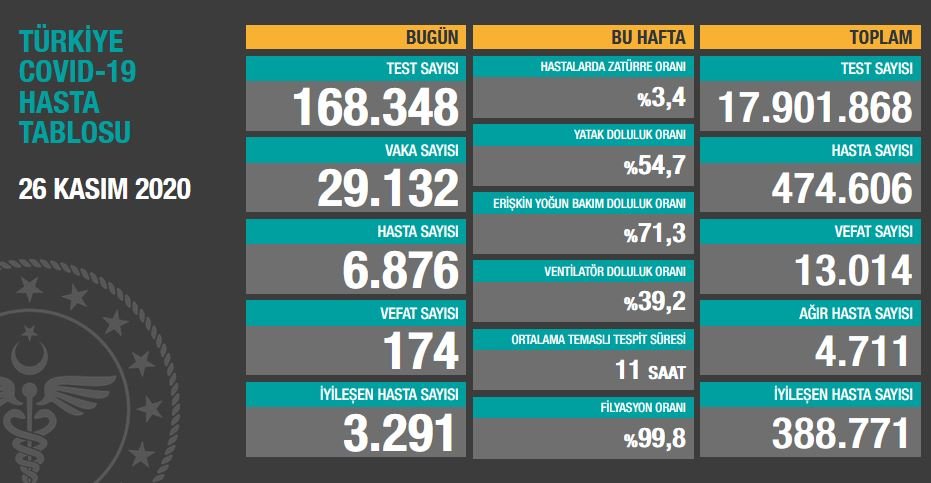
29.132 açıklandı bugün.

Umut Şimşek
Büyük Kaptan
DSÖ'nün yüksek vaka sayısına aşı önceliği söylemi yüzünden açıklamaya başladıkları söyleniyor.

Ekim ortasından beri DSÖ'ye zaten gönderiyoruz vaka sayısını? Öyle dediler?DSÖ'nün yüksek vaka sayısına aşı önceliği söylemi yüzünden açıklamaya başladıkları söyleniyor.

Selcuk Serin
10 Numara!
Medical firmaları paralarını alamıyormuş daha devletten çakma aşı alacaklar tabi para yok
MI 8 Lite cihazımdan Gscimbom mobil uygulaması ile gönderildi
MI 8 Lite cihazımdan Gscimbom mobil uygulaması ile gönderildi
- Durum
- Üzgünüz bu konu cevaplar için kapatılmıştır...